Introduction
In office renovation projects, unforeseen events on the construction site can quickly derail a schedule, increase costs, and complicate coordination between stakeholders throughout the project lifecycle. A late change, poor information flow, or slow decision-making can be enough to create a domino effect across the entire project. This is why project management in commercial space planning can no longer be approached in a fragmented manner.
In this context, integrated project management becomes a true driver of performance. It allows for the linking of strategy, design, technical constraints, budget, schedule, and implementation within a single management framework. Instead of addressing each stage separately, it fosters a comprehensive view of project management, where each decision is evaluated according to its impact on the entire construction site.
Integrated project management not only helps to better manage unforeseen events but also to better control costs and ensure on-time delivery.
In this article, we will expand on the concept of integrated project management and five concrete ways in which it helps reduce unforeseen events on the construction site.
How does integrated project management reduce unforeseen events on the construction site?
1) It aligns stakeholders from the outset
Many unforeseen events on construction sites originate even before the project begins. When expectations are not clearly defined among stakeholders, the risks of misunderstandings, late changes, and conflicting decisions increase significantly.
Integrated project management makes it possible to create a framework for alignment from the very first phases.
The owner, tenant, professionals, contractors, and other stakeholders work from common objectives: budget, schedule, expected quality, building constraints, desired level of flexibility, and occupancy or leasing strategy.
This alignment often results in a clear project plan that specifies responsibilities, priorities, deliverables, validation mechanisms, and arbitration criteria. This established project plan becomes a common reference for project management. It helps prevent significant issues from resurfacing too late on the construction site.
In an office project, this step is crucial, as expectations can vary from one stakeholder to another. Without integrated coordination, the construction phase often becomes the point at which disagreements arise. With a structured approach, the project implementation is more coherent from the very first day of discussions.
2) It improves information flow
One of the main causes of unforeseen problems on a construction site is poor information sharing. A forgotten plan update, a misinterpreted technical detail, or a constraint discovered on-site but poorly communicated can lead to costly rework.
Integrated project management reduces this risk by organizing the flow of information between design, planning, and execution. The project manager plays a central role here, ensuring consistency between the various trades – designers, builders, architects, and others – facilitating communication between stakeholders and ensuring that decisions are fully understood and implemented by everyone involved.
This coordination is particularly important in office projects, where several systems intersect: architecture, mechanical, electrical, furniture, acoustics, lighting, technology, and operations. A change in one component can have consequences for several others. Without an integrated vision, these impacts are often discovered too late.
When information flows smoothly, everyone on the project team can contribute more effectively, with a better understanding of the issues at stake. This ensures the successful implementation and execution of the project, reduces errors, and improves the overall flow of the work.
3) It helps identify risks earlier
All projects involve uncertainties, especially office renovations and complex projects. Poorly documented existing conditions, restricted access, hidden technical constraints, supply delays, or the presence of occupants on-site: the sources of risk are numerous.
The strength of integrated project management lies in enabling earlier identification of these risks, thus optimizing risk management. By linking the various aspects of the project, it helps to identify critical dependencies and areas of vulnerability earlier. A technical issue is not analyzed in isolation, but in terms of its impact on the budget, schedule, quality, and overall feasibility.
This profoundly changes project management, allowing for more precise monitoring of project progress. Instead of reacting to each problem only when it becomes critical, the team can anticipate, prioritize, and prepare alternative solutions. The project manager then has a better basis for guiding decision-making and focusing attention on the most critical elements.
In office projects, this ability to anticipate is particularly valuable, as room for maneuver is often limited. A late decision or a poorly assessed risk can affect not only the construction site, but also the delivery date, the move-in, or the marketing of the space.
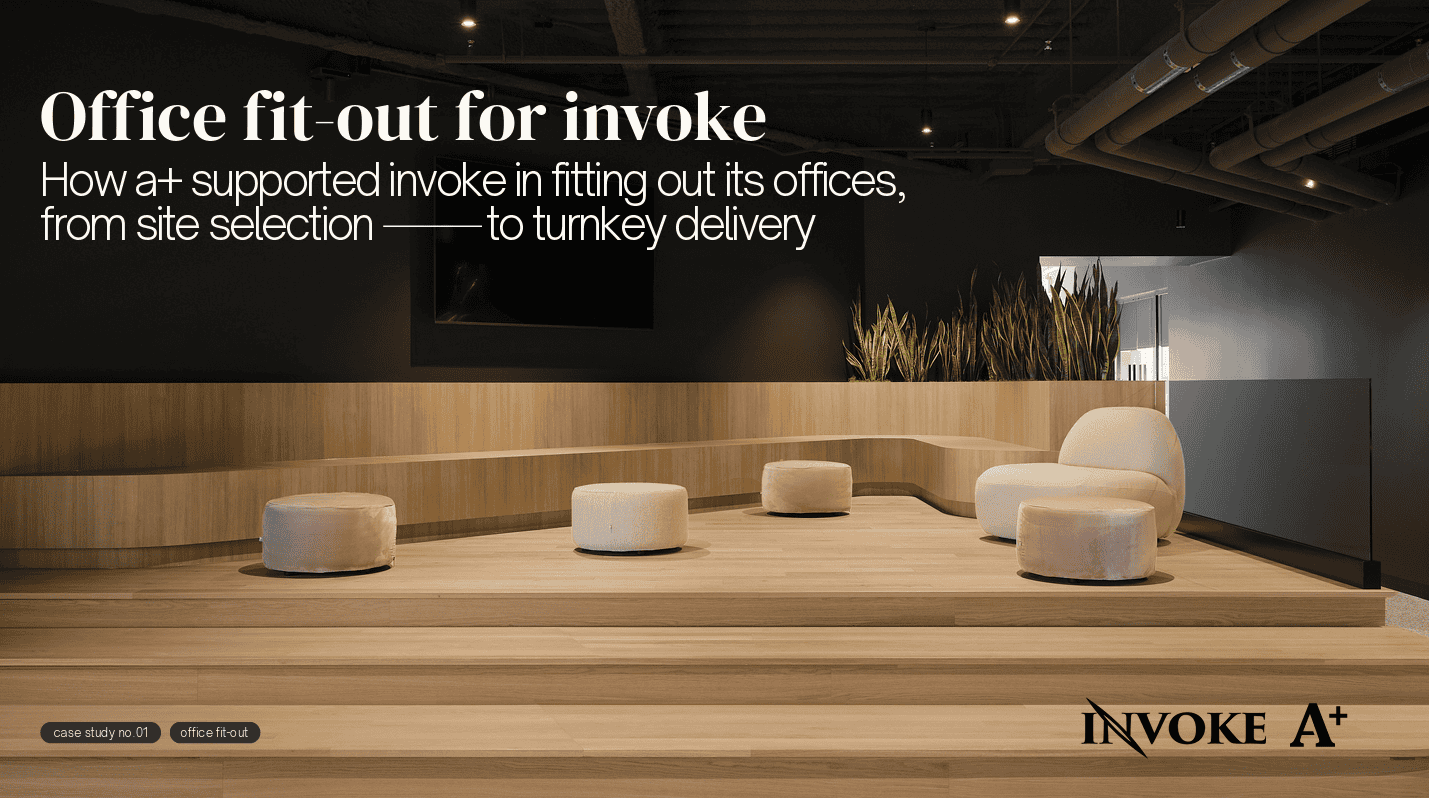
Invoke, A World-Class Studio – From Space Selection to Turnkey Delivery
See how a tech company relocated 32,000 sq. ft. with no delays or cost overruns thanks to a structured, integrated approach.
4) It accelerates decision-making on the construction site
On a construction site, delays are not always caused by the work itself. They often stem from the time needed to resolve an issue. A technical adaptation, material validation, or a minor adjustment can tie up several stakeholders if the decision-making process is unclear.
Integrated project management improves decision-making because it provides a clear framework: who decides, within what timeframe, according to what criteria, and with what information. This clarity reduces downtime and prevents issues from remaining unresolved for too long.
In an office project, this speed is crucial. Decisions often have a domino effect. Modifying a partition, changing a finish, or adjusting a layout can influence several teams simultaneously. Good coordination allows for a rapid assessment of the impacts on cost, schedule, functionality, and the experience of future users.
This approach also improves the quality of decision-making. Stakeholders are not approached hastily and without context. They can make more informed decisions because they better understand the consequences of each option at each phase of the project. This makes it easier to implement necessary adjustments without disrupting the entire project.
5) It connects the construction site to business objectives
An office project shouldn’t just be well-built. It must meet both business and real estate objectives. For a tenant, this might mean fostering collaboration, improving the employee experience, or optimizing space utilization. For an owner or landlord, the project might aim to enhance the attractiveness of a space, reduce vacancy rates, or accelerate leasing.
Integrated project management connects construction decisions to these broader objectives. This prevents project execution from being driven solely by technical or budgetary criteria, without consideration for the final value of the space.
This is where the integrated approach becomes crucial. It helps direct investments toward interventions that have the greatest real impact on project performance, facilitating better resource management. It also avoids choices that may seem economical in the short term but weaken the attractiveness, flexibility, or perceived quality of the space.
In other words, integrated project management is not just about limiting unforeseen events. It helps to better deliver a space that meets its occupancy, usage, and marketing objectives.
Why This Approach Is Particularly Relevant in Office Projects
Office projects are rarely simple. They often involve multiple stakeholders, significant technical constraints, tight deadlines, and high expectations for user experience and real estate performance. In this context, a traditional, siloed approach to project management quickly creates blind spots.
In our podcast, Décloisonner, we discuss why an integrated project management approach, or Design-Build, is more effective than the traditional model.
Unlike the traditional, siloed approach, integrated project management brings together expertise around a shared vision. It empowers the project manager to coordinate stakeholders more effectively and ensure greater consistency between strategy, design, and execution.
Integrated project management also fosters better collaboration among team members, who can work with a shared understanding of priorities. This consistency improves the quality of implementation while reducing the risk of improvised decisions or rework on-site.
Conclusion
In office projects, unforeseen events on the construction site are often the result of a lack of alignment, poor information flow, or insufficient decision-making governance. Integrated project management addresses these challenges by creating a clearer, more fluid, and more strategic management framework.
It aligns stakeholders, structures the management plan, improves the flow of information in real time throughout the project, secures implementation, facilitates decision-making, and supports project delivery. It also empowers project managers and team members to better anticipate risks and protect the project’s value.
For office real estate professionals, this approach is no longer just a best practice. It is becoming a tangible advantage for reducing unforeseen events, better controlling construction sites, and delivering higher-performing spaces.
Tell us about your project!
Do you have a real estate project in mind, but don’t know where to start? We can help! Contact us now to learn more about our services and discuss your project!

Frequently asked questions
In the traditional model, you sign separate contracts with the architect, engineers and contractor, each defending their own interests. With integrated project delivery, a single team designs and builds your space under one contract, with a shared target budget and open-book transparency. You make the decisions; we coordinate execution from start to handover.
Coordinating the architect, engineers and trades yourself means juggling multiple contracts, multiple invoices and shared blame when something goes wrong. With one contract, you have a single point of contact accountable for budget, schedule and outcome. The expertise is already aligned and used to working together, which removes the coordination errors that drive most delays.
We set a target budget at the drawing stage using real data from comparable projects, then design within that budget instead of discovering the price at the end. The agreed price does not change unless you request modifications or different materials. Any hidden condition we uncover along the way is on us.
No. The total cost is usually lower and, above all, more predictable. Bringing design and construction under one contract removes stacked margins, the change orders that come from conflicting drawings, and rework. Open-book transparency shows you where every dollar goes. You pay the real cost of the work, not a chain of middlemen.
Timelines depend on size and complexity, but the integrated approach shortens them because design and construction advance in parallel rather than in sequence. As an example, we delivered the 14 Red Bull Music Academy studios in 18 days. By the second meeting you already have a preliminary budget and drawings to plan around.
Far less than with several vendors to coordinate. You have one point of contact who manages the architect, engineers and trades for you. You keep the important decisions; we handle the daily coordination, follow-ups and on-site surprises. In practice, your role comes down to approving key milestones on an agreed communication routine.
We fit out commercial spaces of every kind: offices, medical clinics, restaurants, retail and industrial spaces, across Greater Montreal and up to roughly 90 minutes from the surrounding region. Our projects run from about 2,000 to 60,000 square feet. Our work includes studios, clinics, factories and pre-built suites for landlords and brokers.
The budget agreed at the drawing stage is guaranteed: any overrun that does not come from a change you requested is on us, not you. Hidden conditions uncovered on site are our responsibility too. For schedule, phased planning and one integrated team cut delays at the source. We deliver turnkey, so your teams can move in the next day.